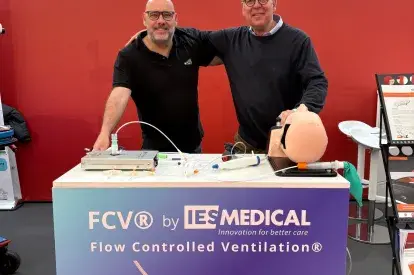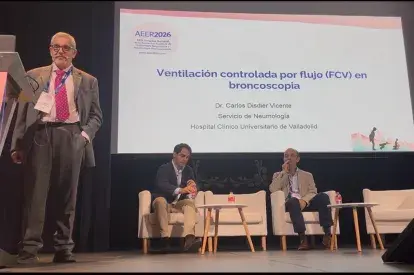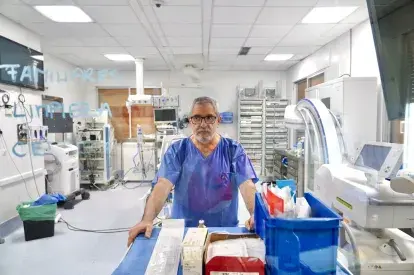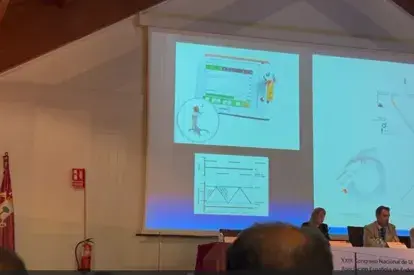

FCV: Redefining Mechanical Ventilation at SIMUVAD 2026
Share



Are we witnessing the most significant shift in invasive mechanical ventilation in decades?
During the X Clinical Simulation Course on Safe Airway Management, held at the Hospital Universitario de la Paz, we had the privilege of attending the "Expert Updates" session to delve into a concept that is transforming clinical practice.
Flow Controlled Ventilation (FCV): A New Standard
Led by Dr. Javier Uriarte, we explored how FCV technology is not just an alternative, but a complete redefinition of traditional mechanical ventilation.
What makes FCV so disruptive? After 70 years of conventional ventilation (PCV/VCV), Flow Controlled Ventilation utilizes a low, continuous flow (without pauses) during both inspiration and (active) expiration. This creates physiological recruitment and allows for individualization through more homogeneous and efficient ventilation. With a lower respiratory rate, it stands as the most protective form of ventilation available today.
Real-World Application and Simulation
In a conference defined by high-fidelity simulation like simUVAD, the limitations of conventional ventilation—especially in difficult airway scenarios—were highlighted. FCV stood out as a minimally invasive ventilation of choice for:
- Difficult airways
- Shared airways
- Extreme situations such as "cannot intubate, cannot oxygenate" (CICO/NINO).
Special thanks to the SIMUVAD family, led by Dr. Pedro Garrido, for these 10 years of turning this course into an international benchmark.
#Anesthesia #FCV #MechanicalVentilation #IESMedical #simUVAD #PatientSafety #Airway #MedTech #HospitalLaPaz


Upcoming events.
Latest news.
Discover the latest updates on equipment for hospitals, emergencies, tactical medicine, and much more.