
"Current vaccines will need to be adjusted to adapt to new variants"
Share



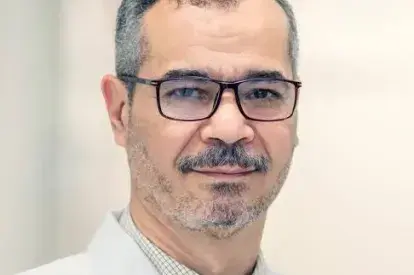
IES Medical interviews Dr. Carmen Älvarez Domínguez, vaccine expert, professor at the International University of La Rioja (UNIR) and researcher at IDIVAL
"I'm convinced that vaccines will end the pandemic, although 2022 will be a year of adjustments."
"It is essential to make a good immunological diagnosis to prevent this situation from happening again," he says.
Immunologist and international vaccine expert Dr. Carmen Álvarez, a professor at the International University of La Rioja (UNIR) and research collaborator at IDIVAL and the Marqués de Valdecilla University Hospital , is optimistic about the end of the pandemic thanks to vaccination, although she predicts that current vaccines will need to be readjusted to adapt to new variants and that 80-85% of the population will need to be vaccinated to achieve herd immunity. Likewise, the researcher, who is currently working on a new peptide vaccine against the coronavirus, emphasizes the importance of increasing immunological diagnosis to "learn from experience" and be prepared for the future. IES Medical asks the expert about all these questions.
IM (IES MEDICAL) : Thank you for your attention and allowing us to share our questions. Do you think the current pandemic situation will end with vaccines?
CA (CARMEN ÁLVAREZ) : Obviously, I think so. The question everyone wants to know is when, and that's more difficult to determine. But we're seeing the effect. I'm very optimistic that the vaccines will put an end to the current pandemic.
IM: So, when do you think herd immunity will be achieved in Spain?
CA : We need to vaccinate between 80 and 85% of the population to achieve herd immunity . Although vaccination has picked up speed, I think herd immunity won't arrive until well into the fall and winter. I don't want to be alarmist, but this pathogen has proven capable of spreading quickly. And unfortunately, vaccines aren't reaching everyone in the world, especially in Africa, Latin America, and parts of Asia. We must help them achieve herd immunity too, because otherwise, ours won't be of any use in this highly globalized world.
IM: You've said that 85% of the population should be vaccinated, when the goal has always been 70%.
CA : Yes, because we're already taking into account the variants that are more transmissible. The Spanish Society of Immunology is aiming for 80-85% to ensure herd immunity because current vaccines don't protect against infection; they're not designed to block the virus. They're designed to prevent severe forms of the disease , and they're very good at that. Therefore, it's important to vaccinate quickly to prevent the emergence of dominant strains that may be more transmissible and escape the vaccines.
IM: As an expert, what do you think will happen with vaccines?
CA : Regarding the ones we already have based on biotechnology, that is, on molecular designs made by us (mRNA, adenovirus, peptides), they adapt well to a new variant. On the other hand, it is more difficult for an attenuated virus vaccine to adapt to new variants. However, attenuated virus vaccines offer the advantage of being able to amplify the immune response to more different proteins that are part of the virus.
Regarding those yet to be developed, I would champion our country because it is very strong in them. The CSIC vaccines based on attenuated recombinant virus technology, which are vaccines that can stop the infection , are already in the early stages of clinical trials.
As for vaccine cocktails, we'll see how we combine one of one type with another of another type... We have a year of many readjustments ahead of us in 2022, and the cocktail could be important, especially in trying to block these new variants that will emerge.
IM: Would you recommend vaccination for people who have had the infection?
CA: Yes, I would advise them to get vaccinated, especially if it's been more than six months (since infection). Perhaps it could be advised not to get vaccinated with two doses or perhaps choose single-dose vaccines. But yes, they should get vaccinated, because the immunity they will gain from vaccination is different. We need to properly diagnose infected and vaccinated people, and monitor their immune status, both in terms of antibodies and cellular factors . Diagnostic tests now play a fundamental role in providing us with information and ensuring it doesn't happen again. We need to learn how the infection behaves, the vaccination, and which is best, and for that, we need to diagnose them.
IM: Another hot topic is the duration of immunity, but we find the data being discussed is inconsistent. What can you tell us about the longevity of immunity?
CA: There are two aspects: the longevity of immunity of those infected and those vaccinated, because they're not exactly the same . It also depends on whether those infected have been asymptomatic, mildly symptomatic, or severely symptomatic; their immunity is different. We know they generate antibodies, and we're seeing that six months and even a year later, they have a high number of antibodies in general. But we're not looking at whether these antibodies are neutralizing or not.
IM: Continuing with this topic, could you explain how cellular and humoral immunity differ and how they can be measured?
CA: Cellular immunity is basically T lymphocytes that respond by recognizing cells infected with the virus and killing them. B lymphocytes, after interacting with T lymphocytes, specialize in producing specific antibodies. And that's the difference: the type of cells that respond to one and the other. But the truth is that in immunology, they're not that separate. B lymphocytes aren't alone in producing antibodies, and T lymphocytes aren't alone in killing infected cells. Separating cellular immunity from humoral immunity is sometimes "simplistic," because B lymphocyte production is also induced by T lymphocytes.
IM: But that distinction is made…
CA: Yes, but that's not true. It's true that cellular immunity isn't as easily measured as humoral immunity, but the cellular response plays a role in antibodies, and if you look at antibodies, you're also indirectly looking at cellular immunity. Measuring specific antibodies is simpler, but not all of them are valid. The important thing is to detect those that recognize that specific part of the virus's binding to cells, those that block entry, those that neutralize. Neutralizing antibodies give a very good idea of the cellular response, perhaps in a crude way, but it's visible . And through the study of neutralizing antibodies, you can select people to then expand studies on cellular immunity.
IM: At the population level, what do you think about looking at the level of neutralizing antibodies to determine a level of protection and, for example, decide whether a person needs a booster dose?
CA: I find it very interesting. As I said, simply looking at the amount of antibodies will only indicate that you've had the disease or that you've been vaccinated. Fine. But we're not vaccinating against a virus that isn't present in the population; on the contrary, we're vaccinating during a pandemic, against a virus that is still present in high numbers. And in this, neutralizing antibodies do have a lot to say because they will reflect whether the immune response is truly adequate, both in those infected and those vaccinated. In other words, it will give us a very good idea of how well our immunity is working to control the virus in the current pandemic situation.
IM: Let's talk about your research now. We'd like to learn a little more about what your research group is doing and the projects you've launched to combat COVID-19.
CA: We hadn't previously worked on coronaviruses, but we had worked on vaccines. Using our experience, we decided to work on a safe, synthetic peptide vaccine to find the most important virulence factor, which in viruses is usually the point of entry. To do this, we relied on antibodies and the regions most of them recognize, as well as the regions recognized by T cells. Why T cells? Because they recognize very small peptides that, on the one hand, activate cytotoxic T lymphocytes and, on the other, condition and modulate B cells to produce antibodies. Taking this into account and using a mathematical algorithm, in collaboration with a mathematics group at the University of the Basque Country and our clinical collaborators at the hospital, we designed a peptide, which is not exactly the RBD. We wanted to know if patients recognize this peptide , and for that, we needed a diagnostic test for neutralizing antibodies.
IM: The test you use is the surrogate viral neutralization test, cPas s (Genscript), distributed by IES MEDICAL in Spain. It is the only one on the market capable of measuring neutralizing antibodies without using cells or live viruses.
CA : Yes, that's exactly what we were looking for because it was vital for us to look for neutralizing antibodies both in case they were important for the humoral response and for the cellular response . Now we want to compare those neutralizing antibodies with our own, with those generated against our peptide, and combine them into a vaccine using nanoparticles by placing peptides on them. And we can also add carbohydrates to direct the nanoparticles to macrophages and dendritic cells and broaden the protection of the vaccines.
IM: As we approach the end of summer, what will happen in September when we return from vacation with the pandemic?
CA: We have the experience from last summer and we know that the virus is declining a bit, but we also have the Delta variant with greater transmission, and we've also opened our borders to tourism. I think we need to do a lot more diagnostics, more testing, to achieve greater control over the emergence of other variants and the generation of neutralizing antibodies in the population after vaccination , etc. To envision a more relaxed autumn regarding the use of masks, for example, I insist: we shouldn't relax right now, regarding the diagnosis. And obviously, we have to remember that we haven't defeated the virus. We still have this year and probably next.
IM: An optimistic message…
CA: I'm very positive. We've learned a lot, and science has made tremendous progress . Other key aspects have been, on the one hand, the pharmaceutical companies; there's never been such a strong connection between them and academia: collaboration brings more benefits than anything else. And, on the other hand, the media had never covered science until now, despite the importance of scientific outreach. Finally, scientists, obviously, used to only talk to our colleagues, and now we've also opened up to help with the outreach work on this virus.
If you want to SEE THE FULL INTERVIEW IN VIDEO FORMAT, click here
Photograph: Dr. Carmen Alvarez, second from left, with her IDIVAL research team
Upcoming events.
Latest news.
Discover the latest updates on equipment for hospitals, emergencies, tactical medicine, and much more.